A Neighbourhood Memory Box for the End of the Season
A neighbourhood memory box keeps a shared event easy to revisit, with a simple method for choosing useful papers, recording changes and storing them safely.
The common mistake with a neighbourhood memory box is waiting until every scrap, photograph and recollection has been gathered. By then, notices have disappeared and small details have blurred. Start with a few useful traces, then sort them while people still remember what changed and why.
Choose papers that explain the shared event
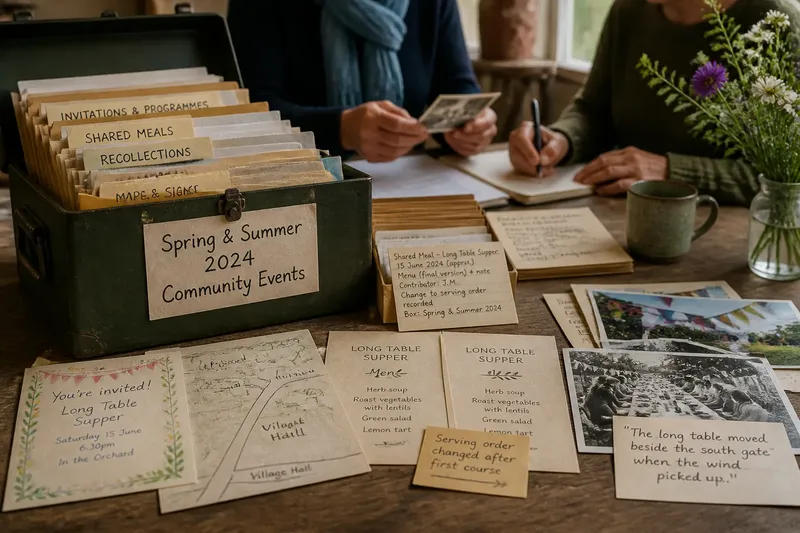
A neighbourhood memory box should help a neighbour understand what happened and how people took part. It need not preserve every sheet. A printed invitation, hand-drawn map, programme, recipe card or sign-up sheet with personal details removed can give a future reader the shape of an occasion.
Pair papers with short notes where the context is not obvious. “The long table moved beside the south gate when the wind picked up” explains more than an uncaptioned photograph. Keep recollections in the contributor’s own words where possible, and ask before including names or personal details.
For bulky or fragile objects, consider a written description or image instead. A paper flower or piece of bunting may matter to the story, but it does not have to be stored in the box if a note can explain its place.
Gather contributions while details are fresh
Collect loose papers soon after the event, then make a final pass at the end of the season. The first collection catches stray notices and immediate memories; the later one gives organisers a chance to add a missing programme or explain a change.
Choose a familiar drop-off point, such as a labelled envelope at the village hall, a tin in the community shop or a named contact. Tell people plainly that a paper trace or a short recollection is enough. Nobody needs to write a polished account or supply a photograph to contribute.
Sort versions by what they explain
Lay the material on a clean table and group it by event or by the part of the season it relates to. Compare duplicates before removing any. Retain one copy of a repeated item when the copies carry the same information; keep a marked-up or amended version instead, or alongside it, if the changes explain what actually happened. Add a note identifying the retained version and the reason for the choice.
For each item or small group, make a paper slip recording what it is, roughly when it was used and who supplied it, if they are happy to be named. Mark uncertain details as uncertain. Put the slip with the item without writing on the original paper.
- Check whether the paper identifies the event: if it does, keep it; if not, add a context note or leave it out if its connection remains unclear.
- Check whether duplicate copies carry different marks or wording: if one has a useful change, retain that version and note why; if none differs, keep one copy and recycle the rest.
- Check whether a paper is borrowed or personally important to its owner: if it is, ask whether a copy or description will do and return the original; if it was offered for the box, label and store it with the collection.
- Check for names, addresses, phone numbers or other private details: if they are unnecessary, remove or cover them on a copy, or leave the item out; if the information is needed to understand the record, ask the contributor before including it.
- Check whether an item needs explanation: if a future reader could misread it, add a short dated or approximate context note; if its meaning is already clear, avoid adding needless commentary.
- Check whether the owner wants an item returned: if so, record the return and give it back; if not, confirm it belongs in the shared collection before filing it.
Say you have an invitation, two menus with identical dishes and one handwritten note saying the serving order changed after the first course. Compare the menus: if neither has a useful mark, choose the clearer copy and recycle the other. Keep the note with the chosen menu, add a slip explaining that it records the change, and return any borrowed original. The resulting set shows both the intended plan and the adjustment, without keeping a duplicate that adds no information.
Ask before keeping photographs and recollections
Ask permission before including photographs, named recollections or material that identifies someone who did not offer it. A group photograph may feel ordinary to its contributor but uncomfortable to someone pictured. If permission is unclear, leave the image out or keep an anonymous description instead.
Offer gentle prompts such as “What detail do you remember?”, “What changed on the day?” or “What would help someone understand this paper?” A person can write a sentence, dictate one for a volunteer to record or decline.
Keep sensitive information out of the general box, including addresses, phone numbers, health details and private disputes. If a contribution raises a concern, ask its contributor what they intended and follow the group’s ordinary privacy arrangements. For consent or record-keeping rules, check the relevant local requirements and the organisation’s policies where they apply.
Store the box so neighbours can find it again
Put papers in labelled folders or envelopes and store them in a clean, dry place away from sunlight, damp and food. A sturdy lidded box keeps loose pages together; leave enough room to retrieve them without creasing. Label it with the event, season and name of the person or group responsible for its care.
Place a simple contents list near the front. Headings such as “invitation and programme”, “shared meal” and “recollections” are enough to guide a reader. Note where the box is kept and how someone can ask to see it.
Choose a keeper who can hand responsibility on. They can check that borrowed items have gone home and that the box has not drifted into a damp shed. If the group lacks a suitable place, ask a neighbour who already looks after community papers for advice.
What do neighbours ask about a memory box?
Does every contribution need a date?
No. Add a date when it is known and helps identify the item. If the timing is approximate, say so rather than presenting an estimate as certain.
Should the group keep original papers or copies?
Keep an original if it has been offered to the collection and the group can store it. For a borrowed or personally important item, ask whether a copy or written description is preferable, then return the original.
What if nobody remembers who made an item?
Keep it only if it still helps explain the event, and label it “maker unknown” or “contributor unknown”. Do not attach a name based on a guess.
How often should the box be opened?
Open it when someone needs the record or when the group adds the next season’s material. A brief check then can catch a missing label or a paper that needs a better folder.
Leave out papers that add no useful context
It is not worth keeping every draft, duplicate handout, disposable label or scrap whose meaning nobody can explain. Elaborate cataloguing and a special storage system are also unnecessary for a small collection. A sensible selection and clear labels are easier for volunteers to maintain.
Before putting the neighbourhood memory box away, read the contents list and ask whether a neighbour who missed the event could work out what the papers relate to. If not, add the missing context or remove an item that cannot be identified. Record the box’s location in the group’s ordinary handover notes so it remains findable when the season and its organisers change.