Village Room or Outdoor Green: Choosing a Place for a Small Meet-Up
Choose a village room or outdoor green for a small meet-up by matching weather, privacy and layout to the conversation neighbours need to have.
The common mistake when choosing a place for a small meet-up is booking whichever venue is easiest, then forcing the conversation to fit. A village room or outdoor green can each make some kinds of talk easier and others awkward, so start with the people and the purpose rather than the available key.
Decide what the conversation needs
Write down what neighbours should be able to do together. A discussion about a shared path may need people to hear one another and look at the same map. An informal catch-up may benefit from space to arrive gradually and drift between conversations. A sensitive local concern calls for more privacy than an open patch beside a footpath can offer.
Keep the aim modest. If the meet-up has one main topic and a small group, decide whether people need to speak in turn, talk in pairs or gather around something visible. That gives you a useful starting point for comparing places, rather than relying on a vague sense that one feels more welcoming.
Match the setting to the sort of talk
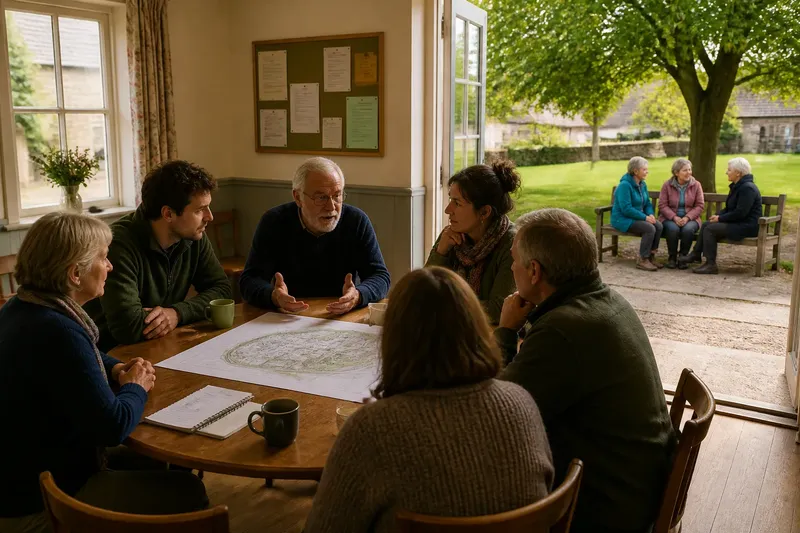
A shared room tends to contain a conversation. Walls can soften wind and passing noise, while chairs and a table help a group settle around a common focus. People can consult papers or a map without holding them down. The enclosure can make a casual gathering feel formal, though, especially if chairs are in straight rows or everyone faces a single speaker.
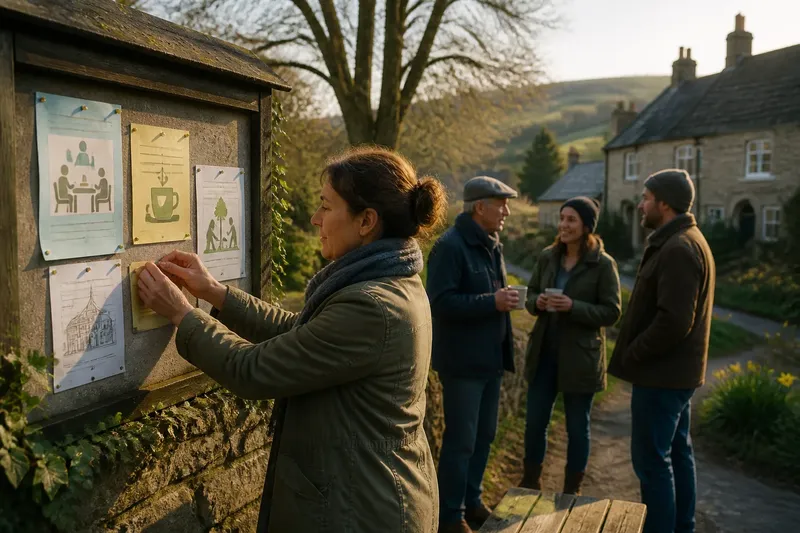
An outdoor green has a looser social shape. People may stand, sit on a bench or chat in small clusters. The open air can suit a brief, relaxed exchange, and the setting may connect the gathering to the place being discussed. But passers-by can hear, movement can interrupt, and the group may have to compete with wind, birds or nearby activity.
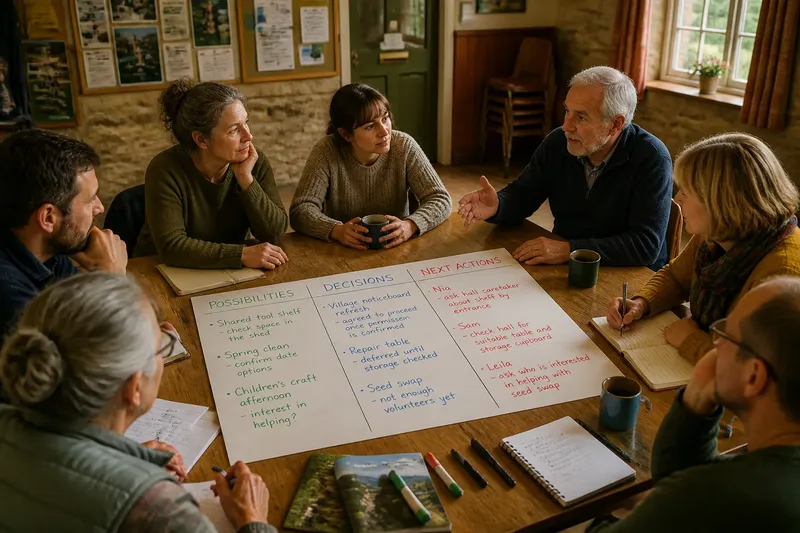
Say the neighbours need to decide where to put a noticeboard. They have a sketch to compare, so they choose the village room, move the chairs into a circle around a table and lay the sketch in the middle. The result is straightforward: everyone can see the same plan and join the same discussion. For a separate conversation whose purpose is simply to hear what people like about the green, they choose its bench instead; looking out at the place gives the informal chat a shared focus, without pretending that the bench suits the noticeboard decision too.
Check weather, privacy and practical comfort
For an outdoor meet-up, consider more than whether the forecast looks pleasant. Think about shade, muddy ground, wind exposure and whether people can sit comfortably. A clear day can still leave a printed plan flapping or make it hard to hear. A room removes some of that uncertainty, but may have limited ventilation or feel cramped once coats and bags are added.
Privacy is about who can overhear, not simply whether the group is small. Use an indoor room for discussion that includes personal circumstances, disagreement or details people would not want carried along the lane. Outdoors, choose a spot away from busy paths if the talk is ordinary but easier without an audience. Do not assume a quiet corner is private if people can approach from nearby.
Before settling on either place, consider access for the people likely to come: the route from the road, uneven ground, steps, nearby seating and access to a toilet. Ask the person responsible for the venue about availability and relevant conditions. Follow the venue’s instructions and local rules where they apply.
Shape the layout around participation
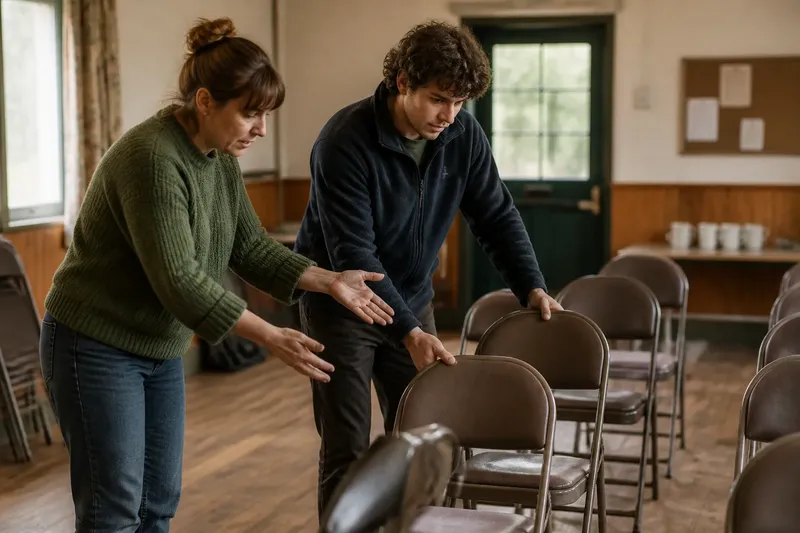
In a room, arrange chairs to make the intended exchange possible. A circle or open horseshoe helps people address one another; a table is useful for papers, but can create a barrier if it fills the whole space. Leave a clear way in and out, and avoid placing one person at the front unless the group needs a presenter.
On a green, the layout may be less fixed, but it still matters. Pick a place where people can hear without blocking a path or making other users feel displaced. A bench can anchor the group; a small standing circle may work for a brief conversation. If people need to read something, bring a firm board or clipboard rather than expecting loose pages to behave outdoors.
Not every detail is worth the effort. Elaborate decorations or a finely staged seating pattern add little to a short neighbourly chat. Put attention into audibility, a comfortable place to pause and whether everyone can take part.
Make the choice and prepare a simple fallback
Compare the options against the conversation, not against an ideal venue. Choose the room when people need a shared surface, shelter from weather or discretion. Choose the green when the setting itself matters, the talk is informal and passers-by will not compromise it. If both seem suitable, consider which one lets people arrive and contribute without fuss.
Then check the details that could change the decision: whether the room is available, whether the green is already in use, and what the weather may mean for comfort. For an outdoor plan, decide in advance what conditions would prompt a move indoors or a postponement, and tell attendees how they will know. A fallback is useful only if people can find out about it.
Which place suits this kind of meet-up?
Is a village room better for a discussion?
It often suits a discussion that needs quiet, shared papers or a degree of privacy. Arrange the room so people can see one another rather than defaulting to rows.
Can a small meet-up work on an outdoor green?
Yes, if the conversation is informal and the spot is comfortable without obstructing other users. Think about wind, nearby paths and whether everyone can hear before choosing it.
How do I judge whether the outdoor spot is private enough?
Consider how close passers-by are and whether the topic would be uncomfortable to overhear. If people may share personal details or disagree candidly, use an enclosed space instead.
What if the weather changes?
Choose a fallback that attendees can reach and explain how you will communicate a change of place. If there is no workable alternative, set a clear point at which you will postpone rather than leave people guessing.
Make the venue decision visible to attendees
Once the place is settled, state it plainly and include any detail that affects arrival: the room entrance, the part of the green to meet at, or the fallback arrangement. Keep the explanation brief. People do not need a defence of the venue; they need to know where to go and what the setting will be like.
Choosing a village room or outdoor green is easier when you treat the place as part of the conversation. The right setting is not necessarily the cosiest or most picturesque one. It is the one that lets neighbours hear each other, speak at ease and give their attention to the matter they came to share.